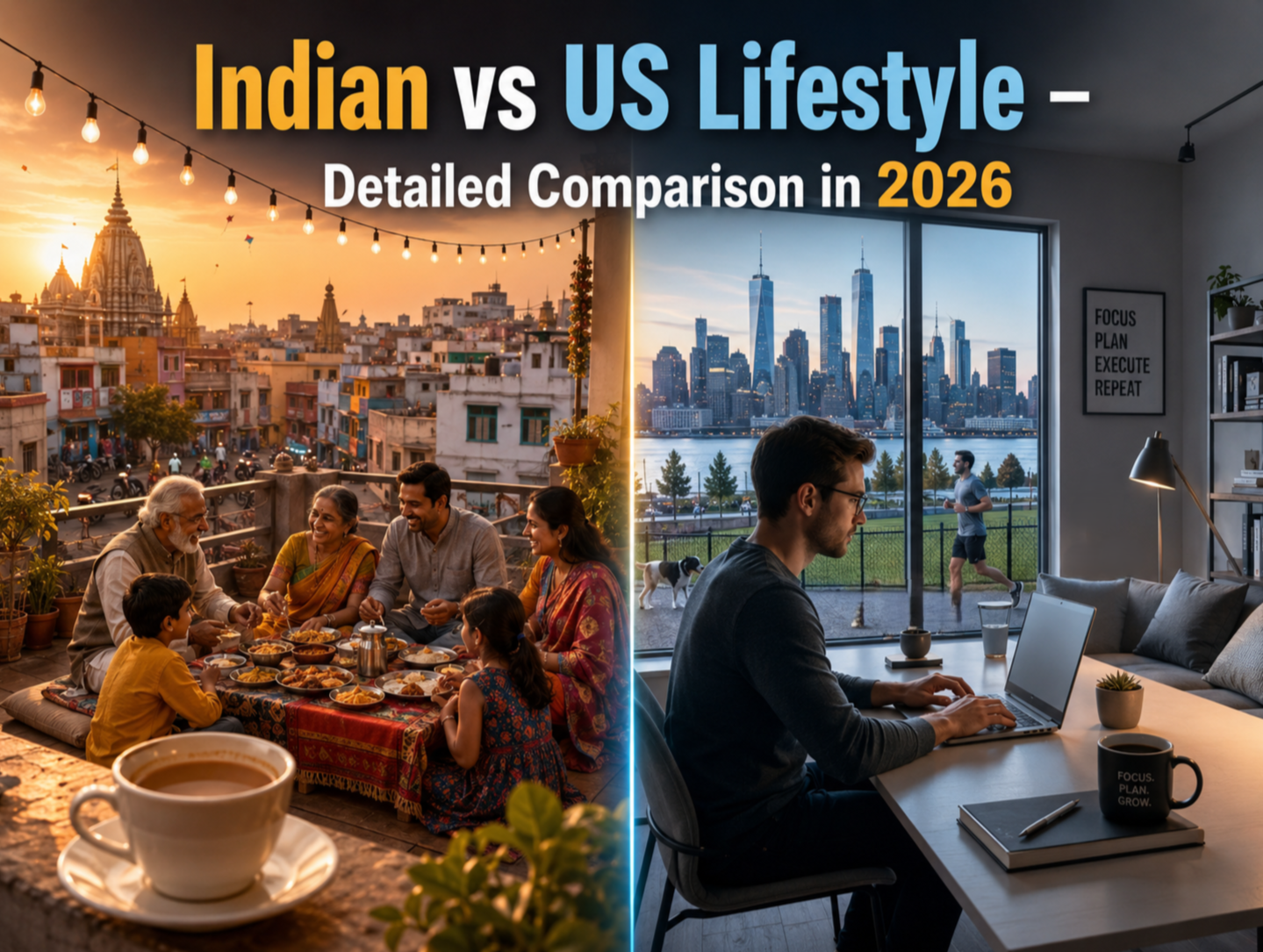
The Indian vs. US lifestyle is always a topic of discussion for many often. The differences and similarities spark ongoing debate and curiosity, especially as both cultures continue to evolve and influence each other.
Every year, the conversation around “Indian lifestyle vs. American lifestyle” gets a little more interesting—not because the core cultural differences have changed dramatically, but because both countries are evolving in response to technology, remote work, inflation, and shifting generational values. In 2026, the comparison isn’t just East vs West anymore; it’s about two very different philosophies of living that are slowly borrowing from each other.
Whether you’re an Indian professional considering relocation, a student planning to study abroad, or simply someone curious about how life differs across these two nations, here’s a deep, honest comparison across the areas that matter most: family, work, money, food, education, healthcare, and social life.
Family Structure & Relationships
- India: Joint families are still common, though less so in big cities. Multiple generations often live together. Even nuclear families maintain strong emotional and financial links with extended relatives.
- US: Individualism rules. Kids usually leave home at 18. Family visits are planned. Elder care is more often handled by assisted living facilities. A growing trend: more Gen Z adults (boomerang kids) are moving back home due to high living costs.
Career Pace and Work Culture
- US: Focus on efficiency, individual achievement, clear work-life boundaries, and “at-will” employment. Typical: 40-hour workweek, two weeks paid leave.
- India: Longer hours, hierarchical structures, and an “always reachable” mindset, especially in IT and startups. Remote and hybrid work is now common, with many working for US companies from smaller Indian cities. Freelance and “geo-arbitrage” (earning in USD, living in INR) is booming.
Cost of Living and Money Mindset
- US: Higher salaries but rising costs—especially housing, healthcare, and childcare. Culture encourages spending, credit, and lifestyle investments.
- India: Urban costs are rising, but overall living expenses remain much lower. Middle-class families often afford domestic help and frequent dining out. Saving, gold, and real estate investment is the norm.
Food and Daily Life
- India: Food is slow, communal, and varied. Eating together is still central. Street food and food delivery apps are popular, and urban areas are shifting to healthier options.
- US: Convenience and individual choice dominate. Processed foods, meal prepping, and grab-and-go are common, but health-conscious trends and home cooking are growing due to inflation.
Education and Early Life
- India: Exam-driven, highly competitive, STEM-focused. Early academic pressure and strong parental involvement are typical.
- US: Emphasis on all-round development, critical thinking, and extracurriculars. Student loan debt and high college costs remain big issues.
Healthcare
- US: World-class technology, but care is expensive and often tied to employer insurance—many are underinsured.
- In India, healthcare is becoming cheaper and the private sector is expanding; however, public healthcare in rural areas still lags behind. Medical tourism is growing.
Social Life and Leisure
- India: Community is central; festivals, weddings, and family gatherings are frequent.
- US: Leisure is more activity-focused and scheduled—gyms, clubs, sports, and travel, usually with friends rather than extended family.
Final Thoughts
- No clear winner: US values independence and efficiency; India values family and affordability. Both are borrowing elements from the other.
- 2026 trend: Remote work blurs lines—Indians earning globally while living locally, young Americans returning to family homes.
- The future is about combining ambition with strong community roots.